He was her carer, she had an injury payout, he gambled: 57.5/42.5
- Together
- About 13 years, de facto
- Children
- Two
- Net pool
- About $417,000
- Split
- 57.5% him / 42.5% her
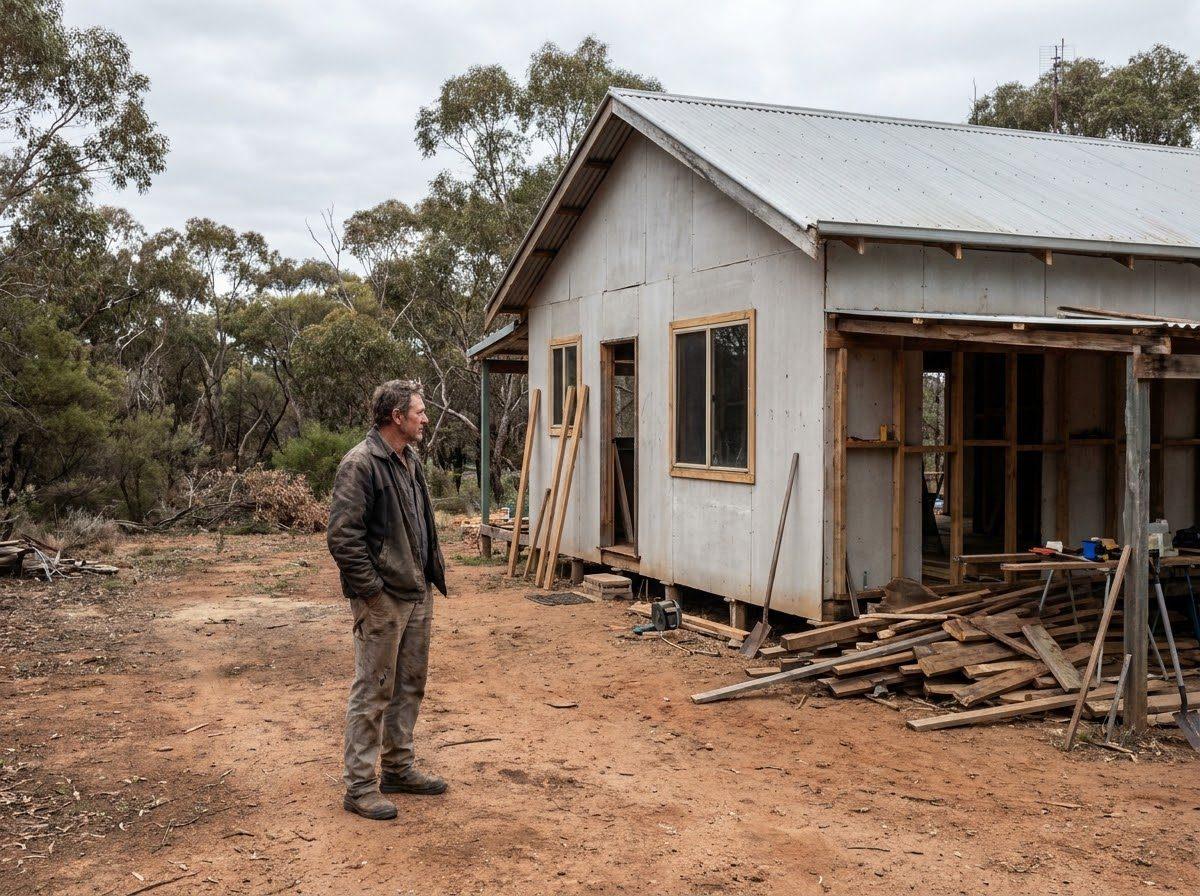
Their de facto relationship began in September 2002, when she and their first child moved to the country town where he lived. They had two children and separated in January 2016. She had been seriously injured in an accident and was a disability pensioner. From August 2002 he was formally her carer for social security purposes, and he received a carer's allowance until they separated. He was self-employed and worked on and off.
He brought in a block he had bought in 1992, with a house he had largely built himself that was still a shell, and half of a vacant block that sold in 2006 for more than $400,000. He netted about $150,000 and used most of it to repay a loan from his brother. In 2006 she received a damages payment of about $157,000 net. Part of it went into the home and a small industrial block.
The net pool at trial was $417,000. Each sought 65% of it. She argued that his gambling losses of about $116,000 since 2015 should be added back. Chief Judge Thackray refused: the couple had kept their money largely separate, and the gambling was most likely funded from his income, mainly after separation. Instead, the waste counted against him when contributions were weighed. Neither side's legal fees were added back.
Contributions were assessed at 57.5% to him and 42.5% to her. The judge gave particular weight to his two properties, while not overlooking her damages payment. Part of that payment was an allowance for him as her carer. He was also the household's mainstay, cooking most evening meals and caring for the children, who now lived with him. Her poor financial prospects and his full responsibility for the children cancelled each other out, so there was no further adjustment.
She was to receive $69,025 from him within 90 days, plus the proceeds of the industrial block: about $177,000 in all, leaving him about $240,000. He kept both houses, provided he paid; if he did not, the family home would be sold.
What it means for you
Gambling losses are not always added back dollar for dollar. Where the money came mainly from income earned after separation, a WA court may weigh the waste in contributions instead.
Western Australian de facto law has no express wastage provision. The 10 June 2025 changes to the Family Law Act 1975 (Cth) that made wastage an express factor for married couples, and for de facto couples elsewhere in Australia, have not been mirrored in Part 5A of the Family Court Act 1997 (WA), as at October 2026.
The decision: [2018] FCWA 187
A published decision of the Family Court of Western Australia, retold in plain English. MKI Legal did not act in this case. Every outcome depends on its own facts. This is general information, not legal advice.
Talk to a family lawyer about your property split
Call us on (08) 9470 2777, or read how consent orders make an agreed property split binding.
More wa de facto couples case studies
She kept the house and paid him nothing; he kept $521,000 in super
She kept the home; he kept his super and businessHe brought in most of the money and had $520,972 in super. The law then could not split a de facto couple's super in WA, so the court balanced it another way.
[2018] FCWA 239
Married in 1986, together again in 2009: 62.5% to her
62.5% to her, 37.5% to himHe owned the house and the business. She paid the bills and helped in the business for three years. He would concede only $15,000 to $20,000, and asked for $169,400 for his own time on the case.
[2015] FCWA 114

Nearly seven years, two homes, and no de facto relationship
Claim dismissed: not a de facto relationshipThey were a couple, on and off, for nearly seven years, holidayed together and helped care for each other's children. He said that made them de facto partners. The court disagreed.
[2021] FCWA 121