He could keep the country home, if he paid her $234,454 in 60 days
- Together
- About 20 years, married
- Children
- Two
- Net pool
- About $455,000
- Split
- 60% her / 40% him
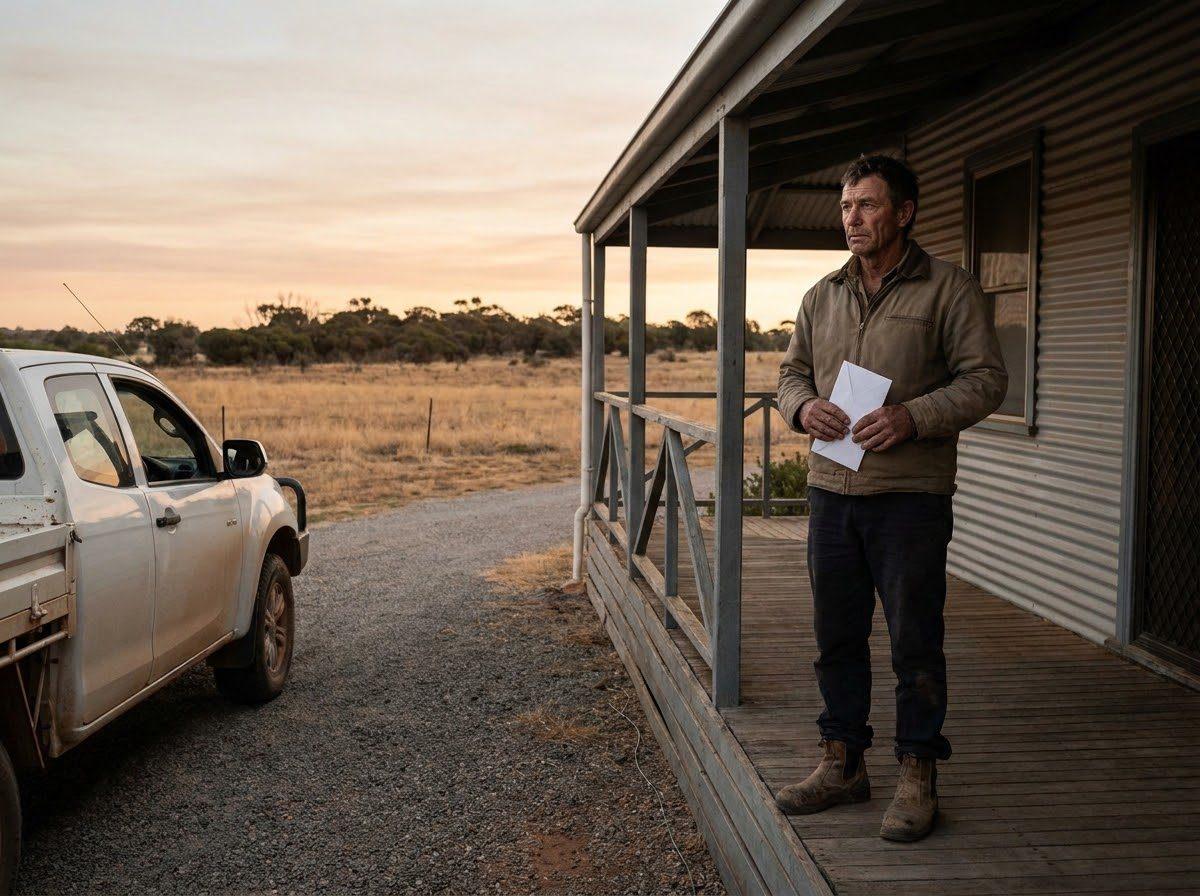
Ms Bailey and Mr Bell were together for about 20 years and married in 1995. They had two children. He was a tradesman who also worked fly-in fly-out, at times up to 100 hours a week, and made the greater financial contributions. She worked in administration, apart from breaks after the births, and was the main carer and homemaker. In 2000 they bought land in a WA country town and built the family home.
They separated in February 2013. For a while they took turns living in the house week about, so that the children could stay put. In 2014 she moved out and rented. He stayed on, paid interest-only repayments, rates and insurance, and maintained the house.
At trial she asked for 67.5% of everything if he wanted to keep the house. He asked for an equal split and to keep it. He represented himself, and his disclosure was inadequate: asked for documents, he often replied that "it's all in the bank statements". Justice Duncanson found the property worth $455,428 including super: the house at $550,000 less a $198,000 mortgage, plus vehicles, a small business, other small items and two super funds.
Contributions were assessed as equal. He had worked very hard, and after separation he had met the outgoings on the home; she had been the main carer and had kept working. The judge then moved 10% to her, mainly because of his non-disclosure and his greater earning capacity. Her gross income was about $35,000 a year. The result was 60% to her ($273,257) and 40% to him ($182,171).
He was given the chance to keep the home, as he wanted. Under the orders the judge proposed, he had 60 days to refinance the loan into his own name and pay her $234,454. If he did not pay, the house was to go on the market and the proceeds would be divided so that she still received 60% overall.
What it means for you
Keeping the house usually means paying out the other person's share by refinancing, and the court will set a deadline with a sale as the fallback. Incomplete financial disclosure can count against the person who fails to give it.
Decided before 10 June 2025. The duty of full and frank disclosure in property cases is now written into the Family Law Act 1975 (Cth) itself (s 71B), and the steps of a property case into s 79. Both largely restate the approach taken here.
The decision: [2017] FCWA 86
A published decision of the Family Court of Western Australia, retold in plain English. MKI Legal did not act in this case. Every outcome depends on its own facts. This is general information, not legal advice.
Talk to a family lawyer about your property split
Call us on (08) 9470 2777, or read how consent orders make an agreed property split binding.
More the family home case studies
Both wanted the family home. Her inheritance had paid down its loans
76% to her, 24% to him; she keeps the houseShe put $510,500 of an inheritance into the loans on the family home. By the time they separated, about $600,000 was owing again, much of it drawn by him for investments. Both wanted to keep the house.
[2019] FCWA 208

He said he had bought half her WA house. There was no half to buy
70.1% to her, 29.9% to himShe owned the land before they lived together, and her mother paid to build the house. He said he had bought the mother's half. The court found she never had one.
[2022] FCWA 103

His aunt and uncle gave him the land. She was still awarded 44.5%
55.5% to him, 44.5% to her; he keeps the home and pays her $684,313The family home sat on a block his aunt and uncle had given him. He could keep it, but had two months to pay her $684,313, and could not borrow against it until he did.
[2020] FCWA 31